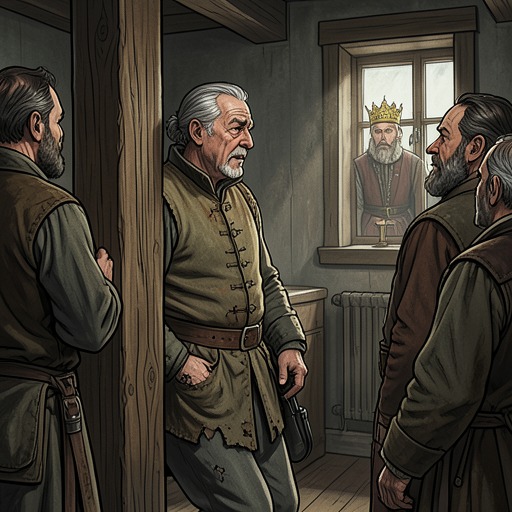
Lord Chief-Justice
Henry IV, Part 2The Lord Chief-Justice is the play’s clearest representative of judicial authority, set against Falstaff’s talent for turning serious accusations into verbal evasions. His encounter with Falstaff establishes a law that cannot be displaced by bluster; at the close, King Henry V affirms his impartial conduct and commands him to remain in office.
Office and First Appearance
The Lord Chief-Justice enters in an official capacity, announced by a servant as the nobleman who wishes to speak with Falstaff. He addresses him formally as Sir John and recalls that he had previously sent for him when matters had arisen that could threaten his life. The exchange places the meeting within the reach of serious legal consequences, even as Falstaff greets the judge with elaborate courtesy.
The Encounter with Falstaff
When Falstaff seeks redress and presses his case, the Lord Chief-Justice identifies the method behind his appeal: Falstaff is accustomed to wrenching the true cause toward a false one. The judge warns that neither a confident appearance nor a crowd of words can make that distortion persuasive. His response defines the conflict as more than a contest of personalities: Falstaff’s performance tries to redirect attention, while the judge insists on the substance of the matter.
Impartiality and Political Authority
At the end of the play, the Lord Chief-Justice explains his own standard of conduct to the new king. He says that he acted in honour, guided by the impartial conduct of his soul, and insists that he will not beg for approval. The statement makes his authority depend, in his own account, on fidelity to an impersonal principle rather than personal favor.
King Henry V accepts that claim, telling him that he is right and weighs the matter well. He then directs the Lord Chief-Justice to continue bearing the balance and the sword. The paired symbols make the king’s approval concrete: the judge is not merely praised but entrusted to continue exercising the office’s authority.
Narrative Role and Ending
The Lord Chief-Justice’s dealings with Falstaff and his closing exchange with King Henry V frame two tests of law: resistance to an individual’s persuasive evasions and the maintenance of judicial authority through a change of reign. Falstaff cannot command the judge’s judgment through confidence or verbal abundance, while the new king publicly confirms the judge’s impartiality. The character’s ending is therefore not a departure from office but its reaffirmation.